Monday, 2 February 2015

YELLOW FEVER

YELLOW FEVER

Yellow fever is an acute viral haemorrhagic disease transmitted by infected mosquitoes. The "yellow" in the name refers to the jaundice that affects some patients.

Signs and symptoms

The incubation period is from 3 days to 6 days.
The symptoms which is :
v  Fever
v  Muscle pain with prominent in backache
v  Headache
v  Shivers
v  Loss of appetite
v  Nausea or vomiting
v  Most patient improve their symptoms after 3 to 4 days

Populations at risk
The virus is endemic in tropical areas of Africa and Latin America, with a combined population of over 900 million people.
Small numbers of imported cases occur in countries free of yellow fever. Although the disease has never been reported in Asia, the region is at risk because the conditions required for transmission are present there. In the past centuries (XVII to XIX), outbreaks of yellow fever were reported in North America (Charleston, New Orleans, New York, Philadelphia, etc) and Europe (England, France, Ireland, Italy, Portugal and Spain).

Transmission
The yellow fever virus is an arbovirus of the flavivirus genus, and the mosquito is the primary vector. It carries the virus from one host to another, primarily between monkeys, from monkeys to humans, and from person to person.

Several different species of the Aedes and Haemogogus mosquitoes transmit the virus. The mosquitoes either breed around houses (domestic), in the jungle (wild) or in both habitats (semi-domestic). There are three types of transmission cycles.

a)Sylvatic (or jungle) yellow fever: In tropical rainforests, yellow fever occurs in monkeys that are infected by wild mosquitoes. The infected monkeys then pass the virus to other mosquitoes that feed on them. The infected mosquitoes bite humans entering the forest, resulting in occasional cases of yellow fever. The majority of infections occur in young men working in the forest (e.g. for logging).

b)Intermediate yellow fever: In humid or semi-humid parts of Africa, small-scale epidemics occur. Semi-domestic mosquitoes (that breed in the wild and around households) infect both monkeys and humans. Increased contact between people and infected mosquitoes leads to transmission. Many separate villages in an area can suffer cases simultaneously. This is the most common type of outbreak in Africa. An outbreak can become a more severe epidemic if the infection is carried into an area populated with both domestic mosquitoes and unvaccinated people.

c)Urban yellow fever: Large epidemics occur when infected people introduce the virus into densely populated areas with a high number of non-immune people and Aedes mosquitoes. Infected mosquitoes transmit the virus from person to person.

Treatment
There is no specific treatment for yellow fever, only supportive care to treat dehydration, respiratory failure and fever. Associated bacterial infections can be treated with antibiotics. Supportive care may improve outcomes for seriously ill patients, but it is rarely available in poorer areas.


Prevention

1. Vaccination
Vaccination is the most important preventive measure against yellow fever. The vaccine is safe, affordable and highly effective, and a single dose of yellow fever vaccine is sufficient to confer sustained immunity and life-long protection against yellow fever disease and a booster dose of yellow fever vaccine is not needed. The vaccine provides effective immunity within 30 days for 99% of persons vaccinated.

2. Mosquito control

The risk of yellow fever transmission in urban areas can be reduced by eliminating potential mosquito breeding sites and applying insecticides to water where they develop in their earliest stages. Application of spray insecticides to kill adult mosquitoes during urban epidemics, combined with emergency vaccination campaigns, can reduce or halt yellow fever transmission, "buying time" for vaccinated populations to build immunity.


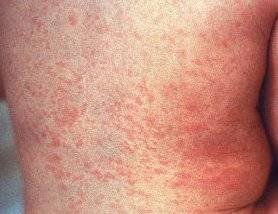
SYMPTOM


  Reference : Yellow Fever 

CHIKUNGUNYA

Chikungunya     

Outbreak of Chikungunya in Johor Bahru, Malaysia
SUMMARY In 2008, an outbreak of chikungunya infection occurred in Johor. We performed a retrospective review of all laboratory confirmed adult chikungunya cases admitted to Hospital Sultanah Aminah, Johor Bahru from April to August 2008, looking into clinical and laboratory features. A total of 18 laboratory confirmed cases of chikungunya were identified with patients presenting with fever, joint pain, rash and vomiting. Haemorrhagic signs were not seen. Lymphopenia, neutropenia, thrombocytopenia, raised liver enzymes and deranged coagulation profile were the prominent laboratory findings. We hope this study can help guide physician making a diagnosis of chikungunya against other arborviruses infection.
Chikungunya is a mosquito-borne disease due to alphavirus and transmitted by mosquito vector Aedes genus (mainly Aedes albopticus and Aedes aegypti). It is characterized by abrupt onset of fever and severely debilitating polyarthralgia/arthritis associated occasionally with maculopapular rash and vomiting.

RESULTS
A total of 117 patients who were admitted for suspicion of chikungunya during the period of study had blood sent for chikungunya testing. However, only blood test results for 35 patients were available for review.

Chikungunya Symptoms


Chikungunya virus infection can cause a debilitating illness, most often characterized by fever, headache, fatigue, nausea, vomiting, muscle pain, rash, and joint pain. The term ‘chikungunya’ means ‘that which bends up’ in the Kimakonde language of Mozambique.

Acute chikungunya fever typically lasts a few days to a few weeks, but as with dengue, West Nile fever and other arboviral fevers, some patients have prolonged fatigue lasting several weeks. Additionally, some patients have reported incapacitating joint pain, or arthritis which may last for weeks or months. The prolonged joint pain associated with chikungunya virus is not typical of dengue.

The fever can occur for a period ranging from 1 to 7 days (usually about 5 days). Chikungunya is commonly mistaken for Dengue Fever due their similar clinical symptoms.

Prevention

The best way to prevent chikungunya virus infection is to avoid mosquito bites. There is no vaccine or preventive drug currently available. Prevention tips are similar to those for other viral diseases transmitted by mosquitoes, such as dengue or West Nile.

- Use insect repellent containing DEET, Picaridin, oil of lemon eucalyptus, or IR3535 on exposed skin. Always follow the directions on the package.

- Wear long sleeves and pants (ideally treat clothes with permethrin or another repellent).

- Have secure screens on windows and doors to keep mosquitoes out.

- Get rid of mosquito sources in your yard by emptying standing water from flower pots, buckets and barrels. Change the water in pet dishes and replace the water in bird baths weekly. Drill holes in tire swings so water drains out. Keep children’s wading pools empty and on their sides when they aren’t being used.

Additionally, a person with chikungunya fever should limit their exposure to mosquito bites to avoid further spreading the infection. The person should use repellents when outdoors exposed to mosquito bites or stay indoors in areas with screens or under a mosquito net.


Seek immediate medical attention from the nearest clinic or hospital if you experience signs and symptoms of Chikungunya.
Can Chikungunya cause death?

In Malaysia, Chikungunya has never been reported as causing haemorrhage (bleeding) or death. However, some patients experience prolonged symptoms. Aged patients could suffer from recurrent joint aches ranging from several months to a year.


AGENT


SYMPTOM


References : CHIKUNGUNYA
                    http://www.e-mjm.org/2009/v64n3/chikungunya.pdf


THE BLACK DEATH

THE BLACK DEATH

What is plague? What is the history of plague?

Plague is a bacterial disease that is infamous for causing millions of deaths in the Middle Ages in Europe. Many historical references describe the illness, which has been referred to as the Black Death. The first reported plague pandemic began in 541 A.D. and lasted for over 200 years, killing an estimated 100 million people or more throughout the Mediterranean basin. The so-called Black Death, or pandemic of the Middle Ages, began in China and made its way to Europe, causing the death of 60% of the entire population. The third, or modern, pandemic started in China in the 19th century and spread to port cities all over the world. Most recently, the World Health Organization reported an outbreak of plague in Madagascar in Nov. 2014. The outbreak affected over 100 patients and caused at least 40 deaths.

Rodents and many other kinds of animals can be infected with plague-causing bacteria. People contract the bacteria through bites of fleas that have fed on infected rodents. Humans can also develop the infection from handling fluids or tissues from infected animals. People with plague pneumonia can also transmit the infection to other humans via coughing infectious droplets into the air.

The Black Death was one of the most devastating pandemics in human history, resulting in the deaths of an estimated 75 to 200 million people and peaking in Europe in the years 1346–53. Although there were several competing theories as to the etiology of the Black Death, analysis of DNA from victims in northern and southern Europe published in 2010 and 2011 indicates that the pathogen responsible was the Yersinia pestis bacterium, probably causing several forms of plague.

The Black Death is thought to have originated in the arid plains of Central Asia, where it then travelled along the Silk Road, reaching the Crimea by 1343.From there, it was most likely carried by Oriental rat fleas living on the black rats that were regular passengers on merchant ships. Spreading throughout the Mediterranean and Europe, the Black Death is estimated to have killed 30–60% of Europe's total population.In total, the plague reduced the world population from an estimated 450 million down to 350–375 million in the 14th century.

The aftermath of the plague created a series of religious, social, and economic upheavals, which had profound effects on the course of European history. It took 150 years for Europe's population to recover.[citation needed] The plague recurred occasionally in Europe until the 19th century.


BLACK DEATH


References : BLACK DEATH 


TYPES OF PLAGUE

DIFFERENT TYPES OF PLAGUE

Types of Plague
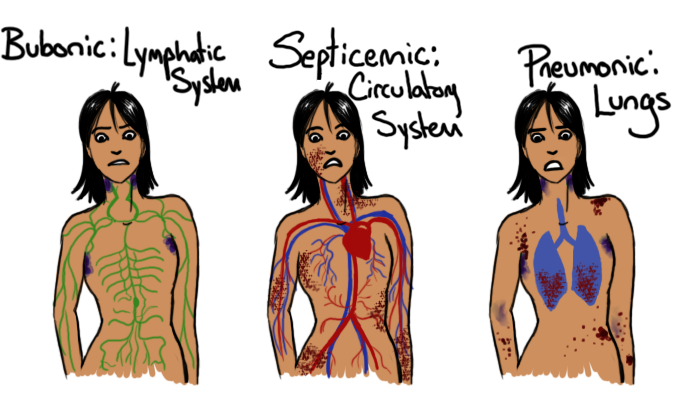
There are three different types of plague: bubonic plague, septicemic plague, and pneumonic plague. The most common type is bubonic plague. Septicemic plague occurs when the Yersinia pestis bacteria (the organism responsible for the disease) multiply in the blood. Pneumonic plague is the most serious of the three types of plague. It occurs when plague bacteria infect the lungs, causing pneumonia.
An Introduction to the Types of Plague
Yersinia pestis (the bacteria that causes plague) can cause three different types of plague in people:
a)Bubonic plague
b)Septicemic plague
c)Pneumonic plague.


Bubonic Plague
With bubonic plague, the most common form of the disease, bacteria infect the lymph system and become inflamed. (The lymph or lymphatic system is a major component of your body's immune system. The organs within the lymphatic system are the tonsils, adenoids, spleen, and thymus.)
 Usually, bubonic plague is contracted through the bites of an infected flea or rodent. In rare cases, Yersinia pestis bacteria may enter through an opening in the skin from a piece of contaminated clothing or other material used by an infected person. Bubonic plague is rarely spread from person to person.Within two to six days of exposure to the plague bacteria, flu-like symptoms may develop, such as:
a)Fever
b)Headache
c)Chills
d)Weakness
e)Swollen, tender lymph glands (called buboes, hence the name bubonic).

Septicemic Plague
Septicemic plague occurs when plague bacteria multiply in the blood. It is contracted in the same way as bubonic plague, which is usually through a flea or rodent bite. Septicemic plague can also appear as a complication of untreated bubonic or pneumonic plague. The condition is rarely spread from person to person. Symptoms of this type of plague include:
a)Fever
b)Chills
c)Weakness
d)Abdominal pain
e)Shock
f)Bleeding underneath the skin or other organs (not buboes).

Pneumonic Plague
Pneumonic plague is the most serious type of plague, and it occurs when Yersinia pestis bacteria infect the lungs and cause pneumonia.Pneumonic plague can be contracted in one of two ways:
I)Primary pneumonic plague is contracted when infected droplets are inhaled. This type of plague can be spread to someone else.
II)Secondary pneumonic plague develops when bubonic or septicemic plague goes untreated, after the disease has spread to the lungs. At this point, the disease can be transmitted to someone else.
Within one to three days of exposure to airborne droplets of pneumonic plague, symptoms can occur, including:
a)Fever
b)Headache
c)Weakness
d)Rapid onset of pneumonia, with:
     i)Shortness of breath
    ii)Chest pain
    iii)Cough
    iv)Bloody or watery sputum (saliva and discharge from respiratory passages).


DIFFERENT TYPES OF PLAGUE


Reference : TYPES OF PLAGUE  


HAWAR(PLAGUE)

Hawar (Plague)

Pengenalan
Hawar adalah jangkitan wabak secara semulajadi yang melibatkan tikus berlaku di merata tempat di seluruh dunia. Penyakit epidemik akut yang melibatkan tikus dan roden liar berlaku di bahagian tengah, timur dan selatan Afrika, Amerika Selatan, bahagian barat Amerika Utara dan di sebahagian besar Asia.

Di sesetengah kawasan, kontak antara tikus hutan dan tikus rumah biasa berlaku dan boleh menyebabkan kes jangkitan manusia dan kadang-kala menjadi wabak.

Agen penyebab:  Yersinia pestis

Cara jangkitan: Jangkitan kutu yang  menular dari tikus ke haiwan lain dan manusia. Jangkitan manusia ke manusia tidak berlaku kecuali semasa wabak pneumonik, apabila titisan cecair pernafasan daripada pesakit menjangkiti orang lain semasa berdekatan.
Wabak juga boleh merebak melalui sentuhan dengan objek yang tercemar (contoh: tisu/tuala), atau cecair atau nanah haiwan yang dijangkiti.

Tempoh pengeraman: 1 hingga 7 hari
Pelancong adalah berisiko rendah. Walau bagaimanapun perjalanan ke kawasan dimana penyakit hawar biasa berlaku (endemik) di kawasan luar bandar mempunyai risiko, terutamanya jika berkhemah atau memburu atau jika tersentuh tikus.

Tanda dan Gejala
v  Demam
v  Batuk
v  Bengkak  yang sakit di pangkal peha, leher dan ketiak
v  Muntah

Jangkitan terbahagi kepada 3 jenis:

Hawar Bubonik: Berpunca dari gigitan kutu yang dijangkiti menyebabkan radang pada kelenjar limfa (limfadenitis) dan sekitar kelenjar limfa. Ciri utama: Bengkak yang sakit dan bernanah.

Hawar Septisemik: Merebak dari wabak bubonik atau berlaku semasa ketiadaan limfadenitis. Jangkitan menular ke dalam aliran darah menyebabkan keradangan di selaput otak (meningitis), renjatan endotoksid dan pendarahan yang teruk akibat Penggumpalan Intravasel Tersebar (Disseminated Intravascular Coagulation - DIVC).

Hawar Pneumonik: Jangkitan boleh menular ke paru-paru dan menyebabkan pneumonia yang teruk. Pesakit boleh merebakkan penyakit melalui titisan cecair pernafasan. Individu yang terkena titisan/cecair  tersebut boleh mendapat jangkitan paru-paru.

Komplikasi
Tanpa rawatan segera dan berkesan, 50 hingga 60% dari kes boleh membawa maut.
Kesan septisemik yang tidak dirawat boleh menyebabkan renjatan endotoksid dan Penggumpalan Intravasel Tersebar (Disseminated Intravascular Coagulation - DIVC) manakala pneumonia teruk berlaku semasa wabak pneumonik.

Rawatan
Rawatan khususStreptomisin adalah disarankan. Ubat lain termasuklah gentamisin, tetrasiklin dan kloramfenikol.

Pencegahan
Jika anda melawat kawasan yang dijangkiti:
v  Elakkan memegang tikus yang hidup atau mati
v  Elakkan berada di tempat yang sesak
v  Elakkan gigitan kutu dengan menggunakan repelan dan racun serangga
v  Elakkan mengendali tikus mati dan laporkan kepada pihak kesihatan jika terjumpa tikus mati
v  Jika anda berhubungan dengan orang yang dijangkiti, elakkan menyentuh cecair tubuh pesakit dan dapatkan rawatan awal
v  Simpan dan lupuskan sisa makanan/sampah dengan betul supaya tikus tidak mencerobohi makanan dan tempat tinggal anda.

Rujukan / sokongan:
v  International Travel & Health, WHO 2006
v  Control of Communicable Diseases Manual, 18th Edition by David L. Heymann, MD, Editor, 2004

Rujukan : HAWAR 


        Agen penyebab:  Yersinia pestis


Wednesday, 28 January 2015

HEPATITIS A

HEPATITIS A
Hepatitis A is a liver disease cause by the hepatitis A virus.The virus is spread by the healthy carrier that ingest food or water that is contaminated with faeces of an infected person.The disease is closely associated with the unsafe water,inadequate sanitation and poor personal hygiene.It can cause debilitating symptoms and fulminant hepatitis (acute liver failure) which is associated with high mortality.

TRANSMISSION
The hepatitis A virus is transmitted primarily by the faecal-oral route which is when the healthy person ingest food or water that has been contaminated with the faeces of an infected person.The virus can also be transmitted through close physical contact with an infectious person, although casual contact among people dose not spread the virus.

SYMPTOMS
i)The incubation period of hepatitis A is usually 14-28 days.
ii))The symptoms of hepatitis A range from mild to severe..
a)include fever
b)malaise
c)malaise
d)loss of appetite
e)diarrhoea
f)nausea
g)abdominal discomfort
h)dark-coloured urine
i)jaundice(a yellowing of the skin and whites of the eyes)


WHO IS AT RISK?
Anyone who has not been vaccinated or previously can contract with the hepatitis A. In areas where the virus is is widespread, most hepatitis A infections occur during early childhood.risk factor include:
i)poor sanitation
ii)lack of safe water
iii)injecting drugs
iv)living in a household with an infected person
v)being a sexual partner of someone with acute hepatitis A infection
vi)travelling to areas of high endemicity without being immunized

TREATMENT
There is no specific treatment for hepatitis A. Recovery from symptoms following infection may be slow and may take several weeks or months.

PREVENTION
Improved sanitation, food safety and immunization are the most effective ways to combat hepatitis A. The spread of hepatitis A can be reduced by:
a)adequate supplies of safe drinking water
b)proper disposal of sewage within communities

c)personal hygiene practises such as regular hand-washing with safe water.

CHOLERA DISEASE

CHOLERA
Cholera is a bacterial infection disease causes by the Vibrio cholerae in the small intestine and causes severe diarrhea. In Malaysia, there were 133 cases of cholera in 2007 with 0:54 incidence rate / 100,000 population.

What are the signs and symptoms?
a)Diarrhea sudden a lot of liquid . This is similar to stink and 'air basuhan beras'.
b)Dehydration (water shortage situation)
i)Pulse / heart beat rate
ii)dry skin
iii)excessive thirst
iv)sunken eyes
v)No tears
c)pooped
d)Sleepiness / ground
e)Less urine
f)Hollow section 'ubun-ubun' for babies
g)abdominal cramps
h)queasiness
i)throw up

The signs or symptoms appear within a few hours to five days after exposure.

How does the disease spread?
a)Through food and drink contaminated with germs year.
b)Lack of personal hygiene.
c)Low on water treatment for drinking and wastewater or sewerage.

Complication
a)Loss of fluids from the body causing dehydration and shock (renjatan).
b)Mortality or death can occur within a short time if not treated.

Treatment
a)Replace body fluids and salts lost.
i)Give therapy Liquid Oral Rehydration (ORS)
ii)Giving liquid through intravenous infusion
iii)Giving antibiotics such as Tetracycline, Doxycline and Ciprofloxacin.

How cholera can be prevented?
Always observe the cleanliness yourself:
a)Wash hands thoroughly with soap and water after using the toilet and before preparing food.
i)Maintain hygiene (sanitation) and exhaust systems stool (feces) suitable especially after floods natural disasters
b)Avoid risky foods during a pandemic:
i)Raw vegetables / salads and fruits, food stalls and ice during an outbreak
ii)Food and beverages from street vendors (cendol and fruit crop)
iii)Ice unless the ice is made from boiled water or water that has been bottled
iv)The food is not cooked or raw fish or shellfish species
v)Only eat food that has been thoroughly cooked or still hot
vi)Use clean water only
vii)Only drink water that has been boiled or water that has been bottled only

What action if I suspected with the disease?
See your doctor immediately for next treatment.